Low-fidelity Storytelling
Learn how I use low-fidelity artifacts to tell a compelling story.

There’s a trap I’ve fallen into more times than I’d like to admit: jumping straight to high-fidelity mocks before the idea is actually ready for them. You spend hours getting the typography perfect, obsessing over corner radius, tweaking the color palette — and then someone in the review asks a question about the core flow that you haven’t really answered yet. All that polish was just noise.
Low-fidelity work forces you to slow down and think. No aesthetics to hide behind. No beautiful gradients to distract from a fundamentally broken interaction. Just the idea, stripped to its bones. When I’m using lo-fi, I’m not designing — I’m thinking out loud in a visual medium. There’s a real difference.
If you have a mature design system you can move fast in high-fidelity and that’s great. But when the idea is still forming? Slow it down.
Drop app
A few years back I had a simple idea for a mobile app: Drop geo-location based messages for others when they’re in an area.
🌩 Brain Storm:
- As I travel around a city, I receive a notification.
- I grab my phone and see this notification: “New Drop! from Pinky”.
- I tap the notification to open it, I see a photo of a group of people and a message: “We’re hanging out if folks are around.”
- I happen to be nearby which is why I received the dropped message.
- I stop in and see my friends.
As I travel around a city, I receive a notification.
The more I thought about it, the more edge cases surfaced. First one: I definitely wouldn’t want notifications pinging me while I’m driving around town. So — the user must be traveling at a walking speed to receive a Drop notification. One constraint, and suddenly the use case snaps into focus.
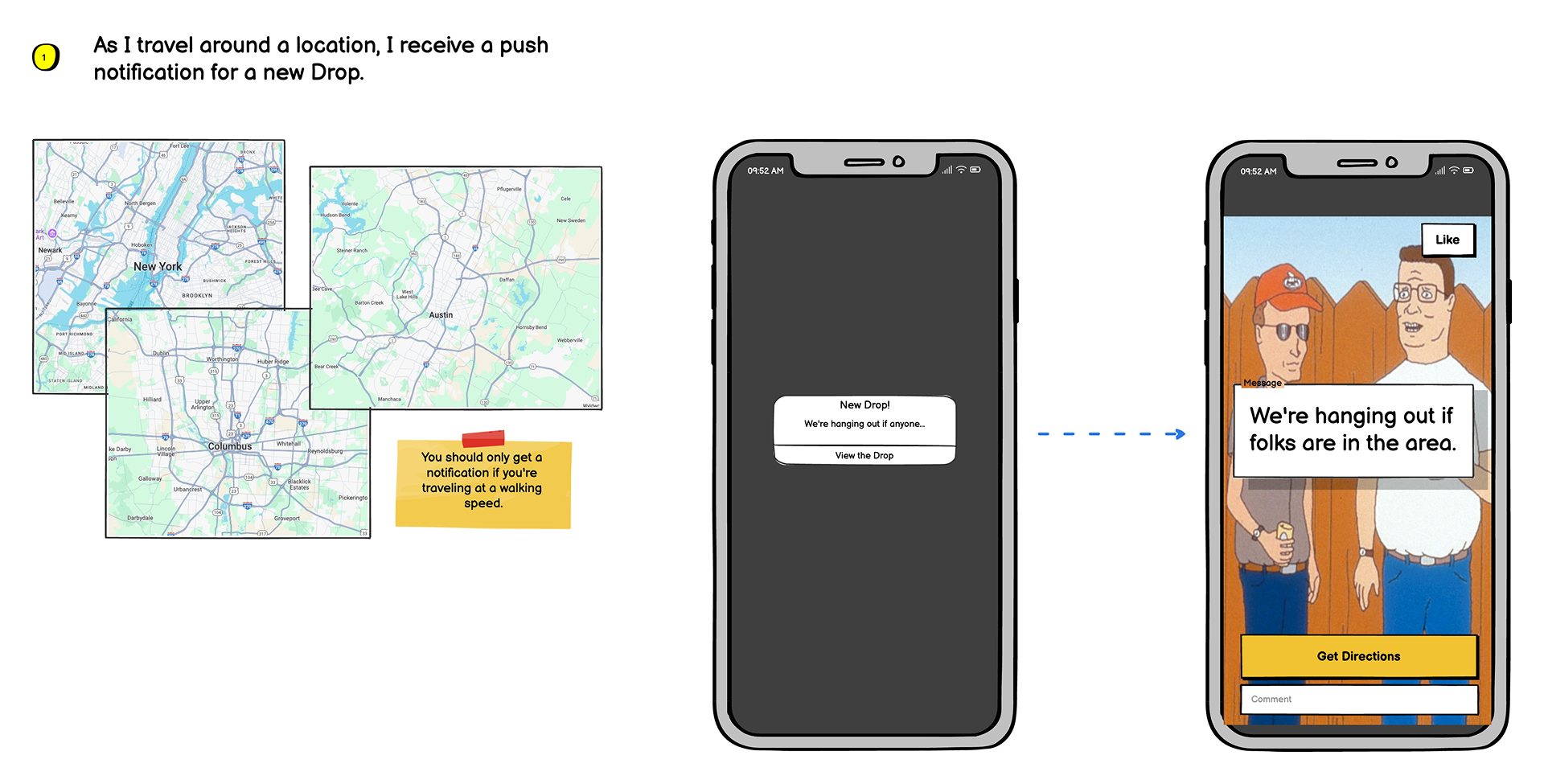
”New Drop!” - I tap the notification to open it…
My first instinct was a friends-list model — you choose who can see your Drops. Then I started asking “what if?” questions and things got more interesting. What if Drops could be public?
- What if I go to a restaurant and the bathrooms are genuinely terrible?
- Drop a public warning. Do the community a service.
- What if I create some street art and want others to come find it?
- Drop a photo. Like hide and seek, but for adults who are into street art.
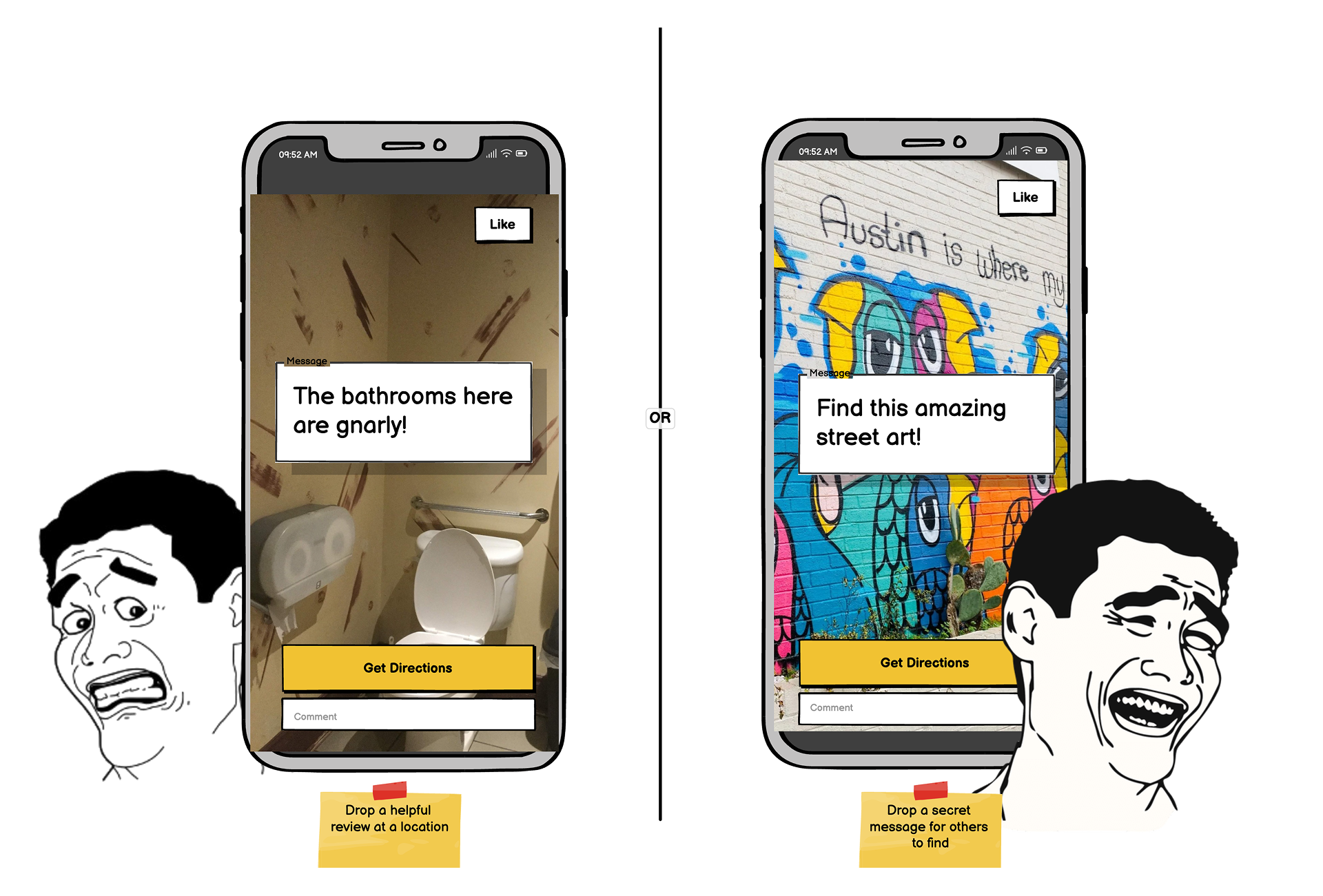
I happen to be nearby which is why I received the dropped message.
The core feeling I was after was simple: know more about the space around you. Know if friends are nearby. Know if there’s something worth stopping for. Geo-location as a layer of social context — less about broadcasting yourself and more about discovery.
The idea had legs. Whether it would have had users is a different question entirely — but that’s what lo-fi is for. Work out the idea before you invest in the execution.
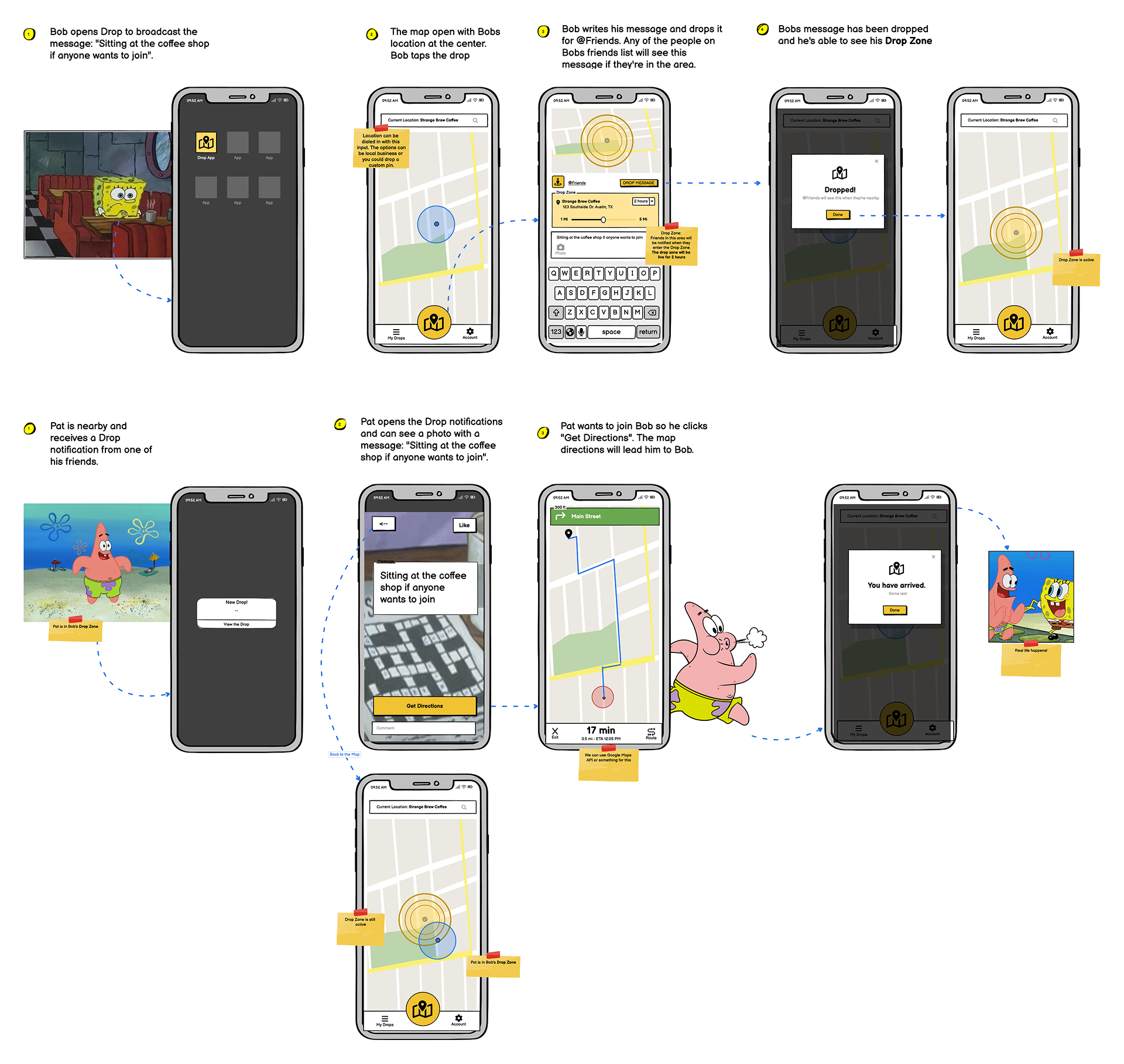
Thanks for reading. Here’s a copy of my Balsamiq UI Kit. Enjoy!